Need drain cleaning in Everett?
Have a leak, a slow drain or a sewer smell? Request a callback to check provider availability, or send a request and share what you see.
No obligation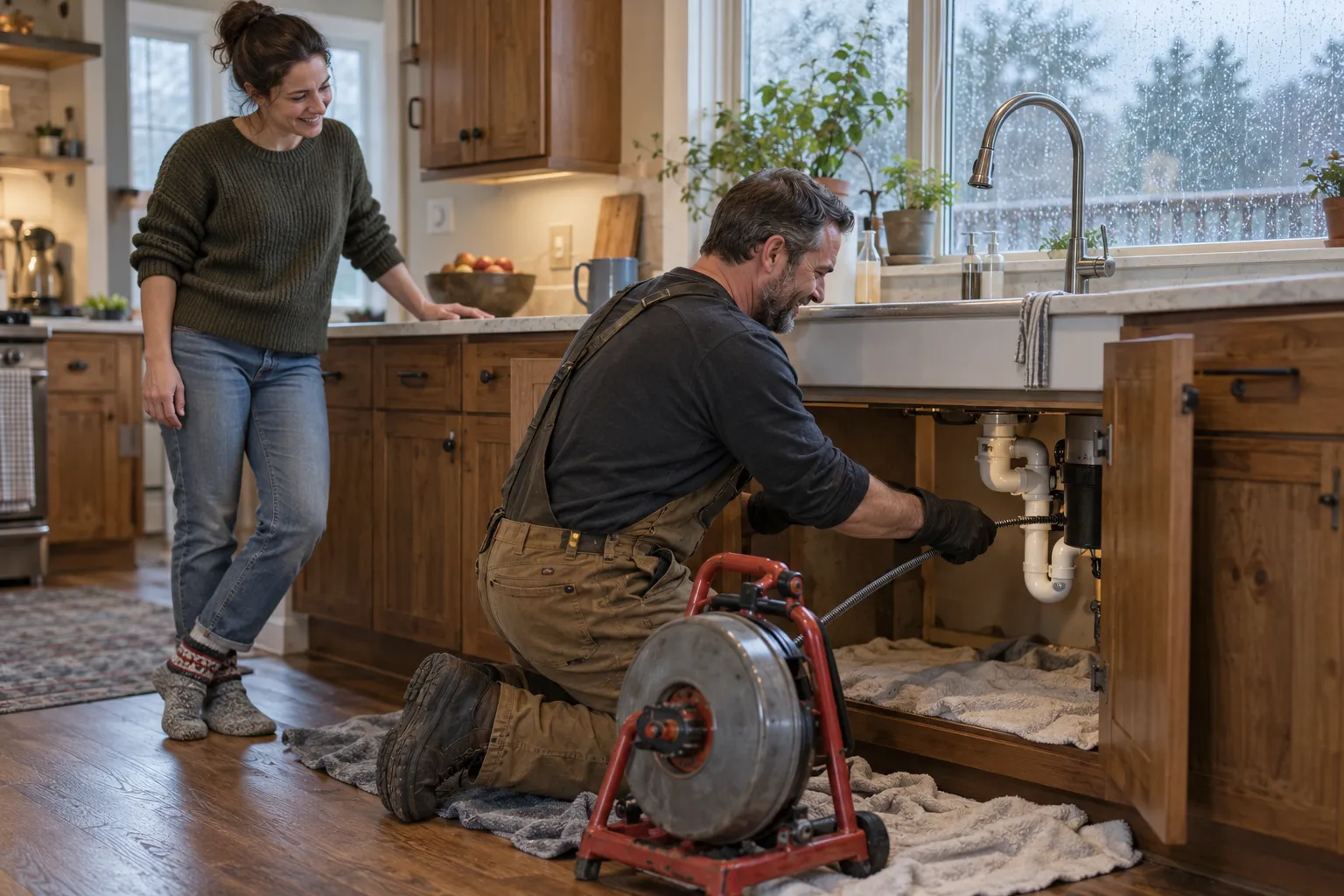
Is your sink filling up, your tub draining slowly, or your toilet bubbling when the washer runs? These are signs of a blocked pipe. The good news is that most clogs can be cleared, and the sooner you act, the simpler the job tends to be.
Spreadeducational Plumbing is a referral service. We do not clear drains ourselves. We connect homeowners in Everett and the Everett area with independent local providers who offer blocked pipe services and emergency drain clearing. Request a callback to check provider availability, or request an estimate and tell us what your drain is doing. The provider you speak with will explain the options, the likely method and the price range before work begins.
Water rising in the sink or tub feels awful. Take a breath. Most clogs can be cleared, and many providers offer emergency drain clearing when water will not go down.
Start with three quick moves. Stop running water in the house. Do not flush. Pull rugs and towels away from the wet spot. Then reach out to a provider.
Request a callback to check provider availability for blocked pipe services near you.
Ask this first. The answer tells a provider where to look.
This is usually a clog in that fixture's own pipe. Hair, soap and grease are the usual suspects. It is often a short job.
Does the toilet bubble when the shower runs? Does water show up in the ground-floor tub after laundry? That points to the main line. A provider may use a longer cable or a camera. If the problem is a damaged pipe, that is sewer line repair, and the provider will tell you.
Keep kids and pets away. Stop using water. Reach out to a provider promptly, and wash your hands well if you touched anything.
Most clogs build up slowly. A few common causes:
Providers pick the method to fit the clog. Here is the usual order.
A good provider explains why they chose a method before starting.
Short answer: skip it. Harsh liquids can irritate skin and eyes. They can be rough on older pipes. If they fail, you are left with standing water full of caustic chemicals, which is unpleasant for the person who has to clear it next.
A plunger is a safer first try. If that does not work, a provider can clear the line properly.
Busy house, busy week. Sometimes a slow drain can wait a little. A backed-up toilet or a flooding floor cannot.
If it is a slow drain, ask the provider for a time window that fits school runs, naps and work calls. Do laundry and dishes before they arrive, then pause water use so the pipes are ready. Clear a path to the sink, tub or cleanout. That keeps the visit short and the disruption low.
Timing depends on each provider, so ask what they have open.
Long, steady rain keeps the ground soggy. Soggy soil sends roots hunting for water, and they love a leaky joint. Leaves and moss wash into yard drains and gutters. Windstorms drop even more debris.
Older craftsman houses often have aging pipes, so they may clog more easily. If you have a crawl space, a slow drain can hide a bigger leak below the floor. Mention that to the provider.
The smartest time to clear a drain is during a dry spell. Ask a provider about a cleaning or camera check before the wet season gets going. It is easier to plan around your day when nothing is flooding.
Small habits make a big difference.
A few questions help you feel in control:
Request a callback to connect with a provider who can answer these.
You tell us what the drain is doing. We match you with an independent provider in the network. The provider talks through the problem, gives you a quote and sets a time. You decide whether to go ahead, with no obligation.
Providers can clear hair, soap and grease from fixture lines so water drains normally again.
A provider can use a closet auger to clear stubborn toilet clogs without harming the bowl.
Cable machines can reach deeper clogs in the main line that hand tools cannot touch.
A small camera shows what is in the pipe, so the provider can explain the cause clearly.
Prices vary by clog, pipe access and the method used. These are typical U.S. ranges, not quotes. Ask the provider for a written quote before work starts, so there are no surprises.
| Item | Typical range | Notes |
|---|---|---|
| Sink or tub clog | $100 – $300 | Simple clogs near the fixture cost less. |
| Toilet clog | $100 – $350 | Auger work is common; hard objects cost more. |
| Kitchen line grease clog | $150 – $450 | Heavy buildup may need a cable or jetting. |
| Main line cable clearing | $150 – $600 | Depends on length and access to a cleanout. |
| Hydro jetting | $350 – $800 | Used for heavy grease or stubborn buildup. |
| Camera inspection | $100 – $400 | Often added when clogs keep coming back. |
Request a callback or send the request form and describe the drain, the symptoms and where water is showing up.
We connect you with an independent local provider in our network.
The provider explains the method and gives a price range, ideally in writing.
The provider does the work and can show you how to prevent the next clog.
Providers in our network work in your area, so they know local homes and pipes.
You get simple explanations of the cause, the method and the price range.
Ask providers about time windows that fit school runs, work calls and family routines.
Request an estimate and decide for yourself. You only move ahead when it feels right.
Have a leak, a slow drain or a sewer smell? Request a callback to check provider availability, or send a request and share what you see.
No obligationGrease, soap and food scraps usually coat the pipe walls and narrow the opening. Hot water can help a little. If the sink stays slow after a plunger, a provider can clear the line with a cable.
They can be harsh on older pipes and risky for skin and eyes. They also may not reach the real clog. A plunger or a provider with the right tools is usually the safer choice.
If several drains are slow, toilets gurgle, or water backs up in a ground-floor tub, the main line may be blocked. A single slow drain usually means a local clog. A provider can confirm with a camera.
Have a leak, a slow drain or a sewer smell? Request a callback to check provider availability, or send a request and share what you see.
No obligation